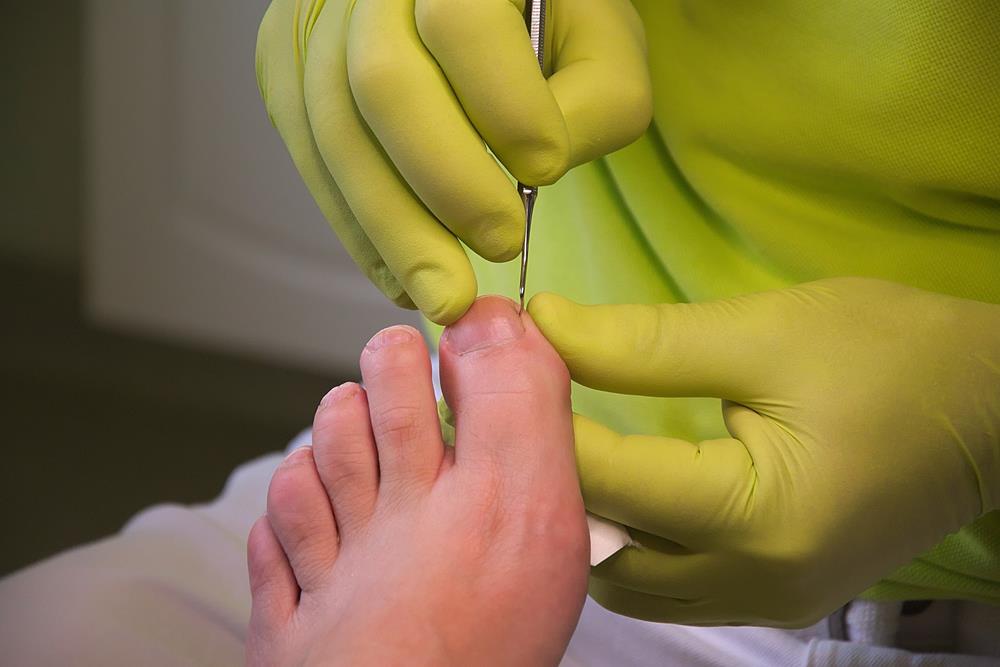
Ingrown Toenails
We’ve all made the painful mistake of trimming our nails too short. When a nail grows into the skin instead of out, it can quickly become a bigger problem than expected.
Request an AppointmentAn ingrown toenail happens when the nail grows downward into the surrounding skin instead of straight out, usually leading to irritation and sometimes infection. Ingrown toenails are most common on the sides of the big toe. Common causes include trimming nails too short or in a rounded shape, tight shoe pressure, injury to the toe, fungal infections, and poor foot structure.
Symptoms to Watch For
Signs of an ingrown toenail include:
- Pain and tenderness along one or both sides of the nail
- Redness and swelling
- Fluid or pus if an infection develops
- Skin that grows over the edge of the nail
At-Home Care
For mild cases, warm water soaks several times a day, properly fitted shoes and socks, and trimming nails in a straight line, rather than rounded, are effective ways to treat and prevent painful ingrown toenails.
When to See a Podiatrist
If your ingrown toenail is causing significant pain, showing signs of infection such as pus, warmth, or spreading redness, or isn’t improving with home care, it’s time to have it evaluated. This is especially important for patients managing diabetes, since our diabetic foot care team recommends prompt attention for any nail issue in diabetic patients due to a higher risk of complications.
Professional Treatment Options
If an infection is present, antibiotics may be prescribed. For recurring or more severe ingrown toenails, a minor in-office procedure can remove the offending portion of the nail and, in some cases, treat the nail bed to prevent regrowth in that area.
Ingrown toenails can sometimes be confused with or accompanied by toenail fungus, so a proper evaluation helps ensure the right treatment. If you’re new to our practice, visit our new patients page or meet the doctor before your first visit.
Frequently Asked Questions
Can I treat an ingrown toenail at home?
Mild cases often improve with warm water soaks, proper footwear, and careful nail trimming. More painful or infected cases should be evaluated by a podiatrist.
How do I know if my ingrown toenail is infected?
Signs of infection include increasing redness, warmth, swelling, and drainage of pus from around the nail.
Why do ingrown toenails keep coming back?
Recurring ingrown toenails are often related to nail shape, trimming habits, or shoe fit, and a minor in-office procedure can help prevent future occurrences.
Are ingrown toenails more serious for diabetic patients?
Yes, diabetic patients face a higher risk of complications from ingrown toenails and should have them evaluated promptly. Learn more about our diabetic foot care.
What’s the best way to trim toenails to prevent ingrown nails?
Trim nails straight across rather than rounding the corners, and avoid cutting them too short.
Is the in-office procedure for ingrown toenails painful?
The area is numbed before the procedure, so most patients experience minimal discomfort during treatment.
When should I see a podiatrist for an ingrown toenail?
If home care isn’t helping, pain is significant, or you notice signs of infection, it’s time for a professional evaluation.