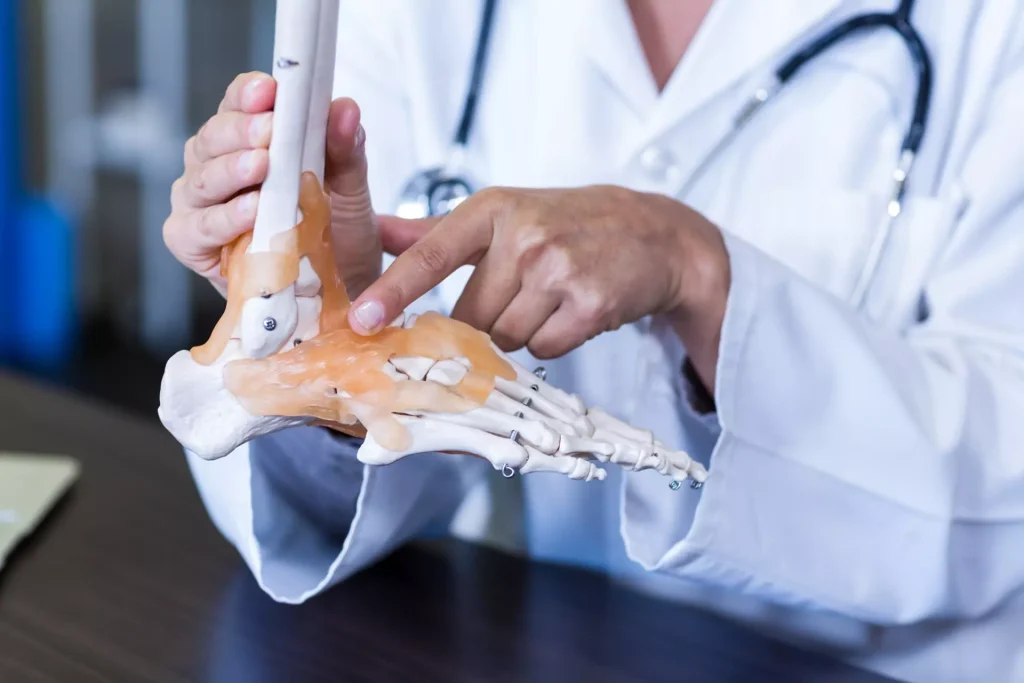
Fall Risk Assessment
Falls are a leading cause of injury for older adults, but many are preventable. A fall risk assessment helps identify problems with your feet, balance, or gait before an injury happens.
Request an AppointmentWhile anyone can fall, adults over 65 face a much higher risk, and falls remain a leading cause of serious injury in this age group. Recognizing your personal risk factors is the first step toward prevention. Ask yourself:
- Have you taken a fall recently?
- Do you have arthritis in your feet or ankles?
- Do your legs feel weak or unstable when walking?
- Do you shuffle your feet, trip, or lose your balance often?
- Do you need to hold onto furniture, walls, or handrails to steady yourself?
If you answered “yes” to any of these, it’s worth speaking with a podiatrist about your fall risk and how to improve your stability.
What Is a Fall Risk Assessment?
A fall risk assessment is a tool we use to evaluate how likely you are to fall, helping identify risk factors before an injury occurs. This matters because people who have already fallen once are significantly more likely to fall again within the following year.
One common tool is the Morse Fall Scale, which looks at factors such as:
- Whether you’ve fallen before
- Other medical conditions you may have
- Use of walking aids
- Your gait, or the way you walk
- Mental alertness
Based on your answers, a score estimates your level of risk: 0–24 is considered low risk, 25–50 moderate risk, and 51 and above high risk. These assessments aren’t just for after a fall — they’re a proactive way to stay safe, especially for adults who may be hesitant to mention minor slips or instability.
What Causes Falls?
Falls typically result from a combination of internal and external factors. Internal causes may include weak muscles, poor balance or coordination, joint conditions like arthritis, posture instability, neurological conditions, or bladder control problems. External factors might include inappropriate footwear, slippery or uneven surfaces, medication side effects, inactivity, or incorrect use of canes, walkers, or other mobility aids.
How We Help With Fall Prevention
Since many falls are linked to foot pain, instability, or alignment issues, our podiatrist plays a key role in prevention. This may include:
- A full fall risk evaluation
- Addressing foot and ankle pain or deformities, including conditions like neuropathy and flat feet
- Recommending supportive footwear or custom orthotics
- Prescribing ankle-foot orthoses (AFOs) if needed
- Guiding strength and balance exercises
- Educating patients on how to safely move and maintain stability
Ankle-foot orthoses, or AFOs, are specially designed braces that support the lower leg, ankle, and foot, customized for each patient to improve stability, especially for those with weakened muscles or joint issues. We also provide focused geriatric foot care to support overall foot health as you age. If you’re new to our practice, visit our new patients page or meet the doctor before your first visit.
Frequently Asked Questions
Who should get a fall risk assessment?
Adults over 65, especially those who have fallen before, feel unsteady when walking, or rely on furniture or handrails for balance, are good candidates.
Is a fall risk assessment painful?
No, a fall risk assessment is a non-invasive evaluation of your gait, balance, and medical history to estimate your risk of falling.
What is the Morse Fall Scale?
The Morse Fall Scale is a scoring tool that evaluates fall history, medical conditions, use of walking aids, gait, and mental alertness to estimate fall risk.
Can custom orthotics reduce my fall risk?
Custom orthotics can improve stability and support for patients whose foot structure or alignment contributes to balance issues.
What is an ankle-foot orthosis?
An ankle-foot orthosis, or AFO, is a custom-fitted brace that supports the lower leg, ankle, and foot to improve stability for patients with weakened muscles or joint issues.
Does neuropathy increase my risk of falling?
Yes, neuropathy can reduce sensation in the feet, making it harder to sense uneven ground and increasing fall risk.
How often should I have a fall risk assessment?
This depends on your individual risk factors. Your podiatrist can recommend a reassessment schedule based on your history and any changes in your mobility.