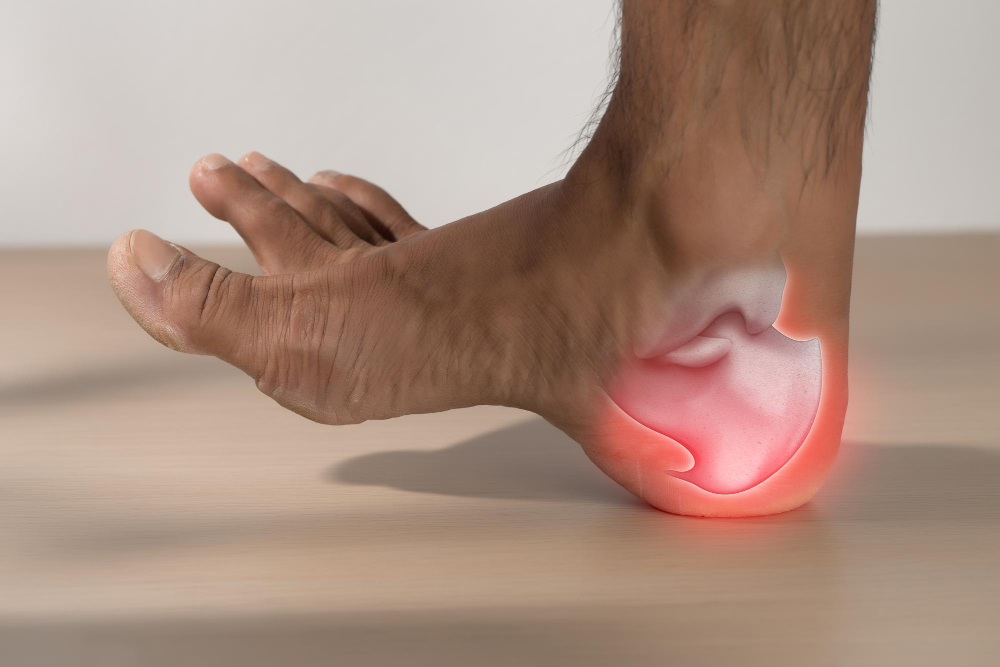
Plantar fasciitis is one of the most common causes of heel pain, but a few minutes of stretching each day can go a long way toward preventing it in the first place.
Why does stretching help prevent plantar fasciitis?
Tightness in the calf muscles and Achilles tendon puts extra strain on the plantar fascia, the band of tissue that runs along the bottom of the foot. Regular stretching helps keep that tissue flexible and better able to absorb daily stress.
What’s the best stretch for the plantar fascia itself?
Sitting down and gently pulling your toes back toward your shin, holding for 20 to 30 seconds, directly targets the plantar fascia and is especially helpful first thing in the morning.
Should I stretch before or after exercise?
Both matter, but a proper warm-up before activity and a cool-down stretch afterward can help reduce strain on the plantar fascia and surrounding tissue.
Are calf stretches really connected to heel pain?
Yes. Tight calf muscles limit ankle flexibility, which increases stress on the plantar fascia with every step. Simple wall calf stretches are one of the most effective preventive tools.
Can stretching alone fully prevent plantar fasciitis?
Stretching helps significantly, but supportive footwear, gradual increases in activity, and custom orthotics when needed all play a role in keeping plantar fasciitis at bay.
The American Podiatric Medical Association recommends daily stretching as part of a broader strategy for preventing common overuse injuries like plantar fasciitis.
If you’re already dealing with heel pain despite stretching regularly, it may be time for a closer look. Call (859) 296-4272 - Lexington Office or (859) 236-5140 - Danville Office to schedule an evaluation at our Lexington or Danville office.